This section provides both a map and a graph to visualize where specific treatment prescriptions were applied and to explore stand-level direct effects on metrics relating to stand structure and composition, fuel structure and composition, and potential fire impacts (see table below). Note that visualizations show the unitless ratio between baseline and treatment values (Δ) and not absolute values of those metrics.
The Treatment Analysis displays direct effects for both forested and non-forested areas inside of project areas. It generates a 20-year analysis of treatment plans, displaying direct effects at 5-year intervals: 0, 5, 10, 15, and 20 years.
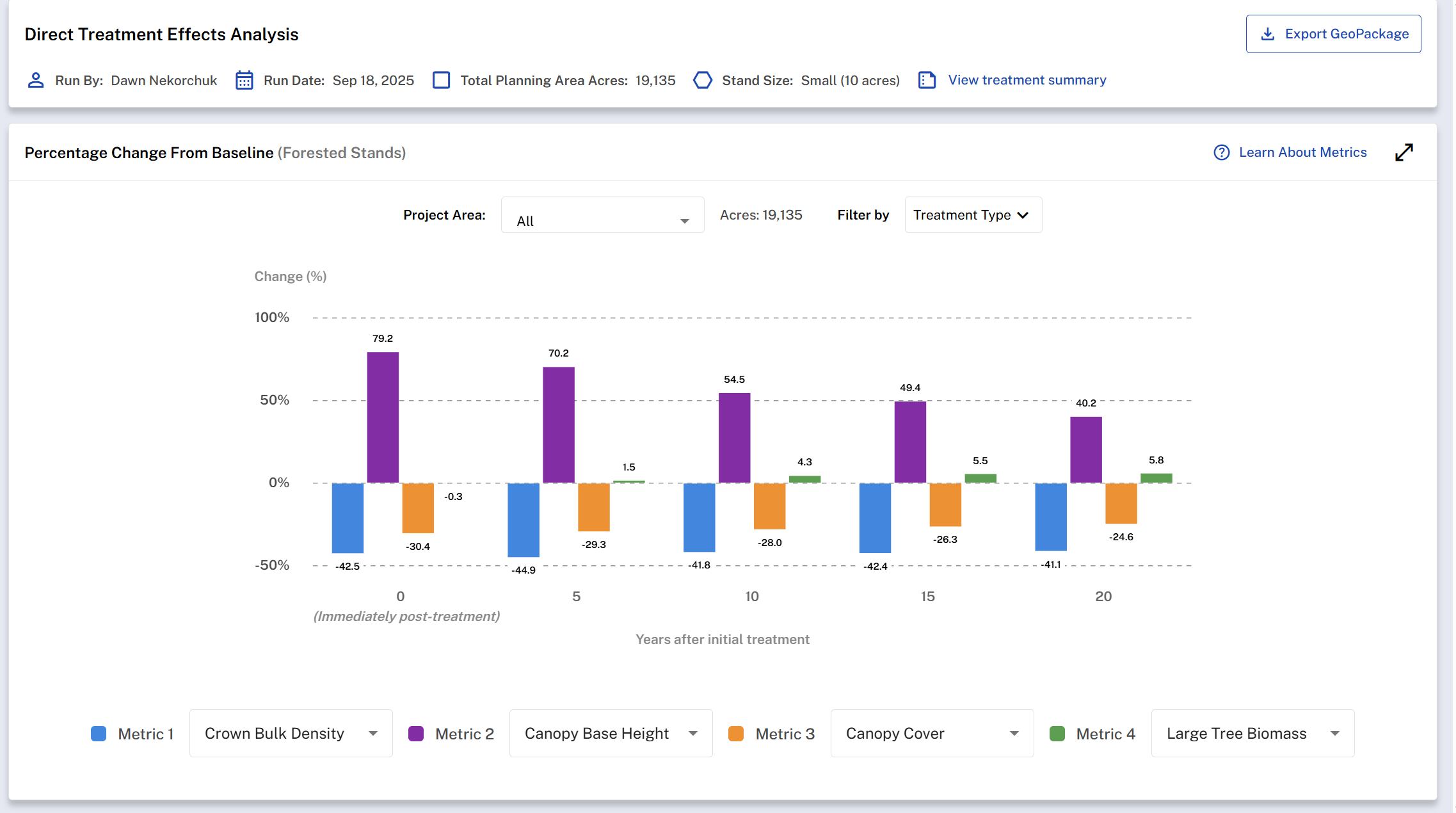
This graph visualizes percentage changes from the baseline over a 20-year period, with data points at 5-year intervals (0, 5, 10, 15, and 20 years). Year 0 represents the immediate post-treatment condition, while subsequent time steps illustrate longer-term treatment effects. The data is derived from the Treatment Effects model using FVS and reflects direct effects outputs for forested stands. “% forested” refers to the proportion of the stand that is considered forested based on the TreeMap data product.
Metric Selection: Use the metric selector at the bottom to adjust the displayed direct effects outputs. Up to four metrics can be shown at once.
Project Area Filtering: View aggregated changes for the entire planning area or isolate results for a specific project area.
Treatment Type Filtering: Filter by treatment type, displaying results only for stands where the selected treatment(s) were applied.
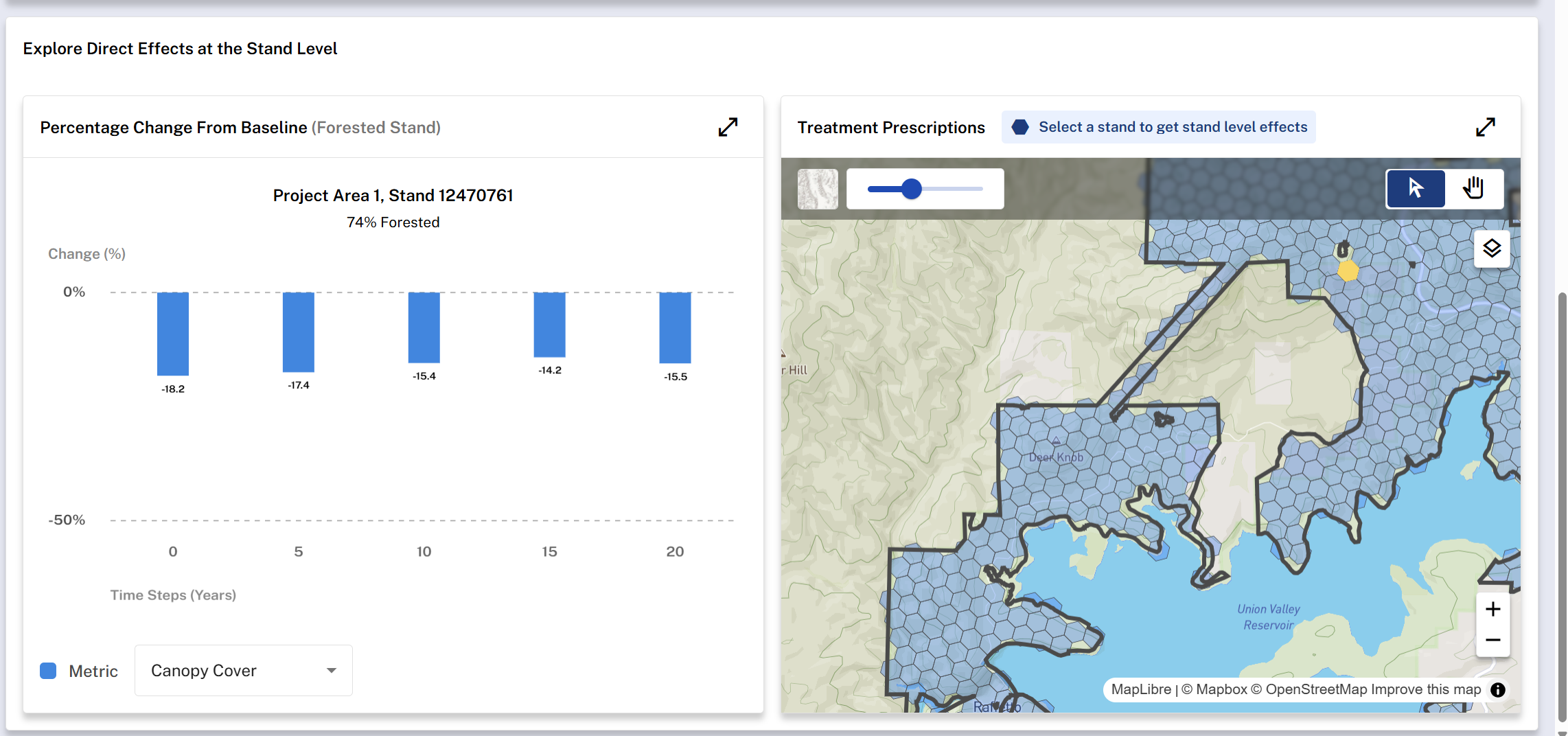
Once a stand is selected, this graph provides a detailed stand-level view of direct effects based on treatment type and landscape characteristics.
Forested Stands
- Displays the same data as the Percentage Change from Baseline graph but at the individual stand level.
- Users can view one metric at a time, adjustable via the metric selector at the bottom.
Non-Forested Stands
Instead of showing percentage change from baseline, this graph presents a table displaying:
- Rate of Spread (ROS) adjective class
- Flame Length adjective class
These values represent the actual post-treatment classification of the stand at each 5-year time step, rather than a comparison to baseline conditions.
Was this article helpful?
That’s Great!
Thank you for your feedback
Sorry! We couldn't be helpful
Thank you for your feedback
Feedback sent
We appreciate your effort and will try to fix the article