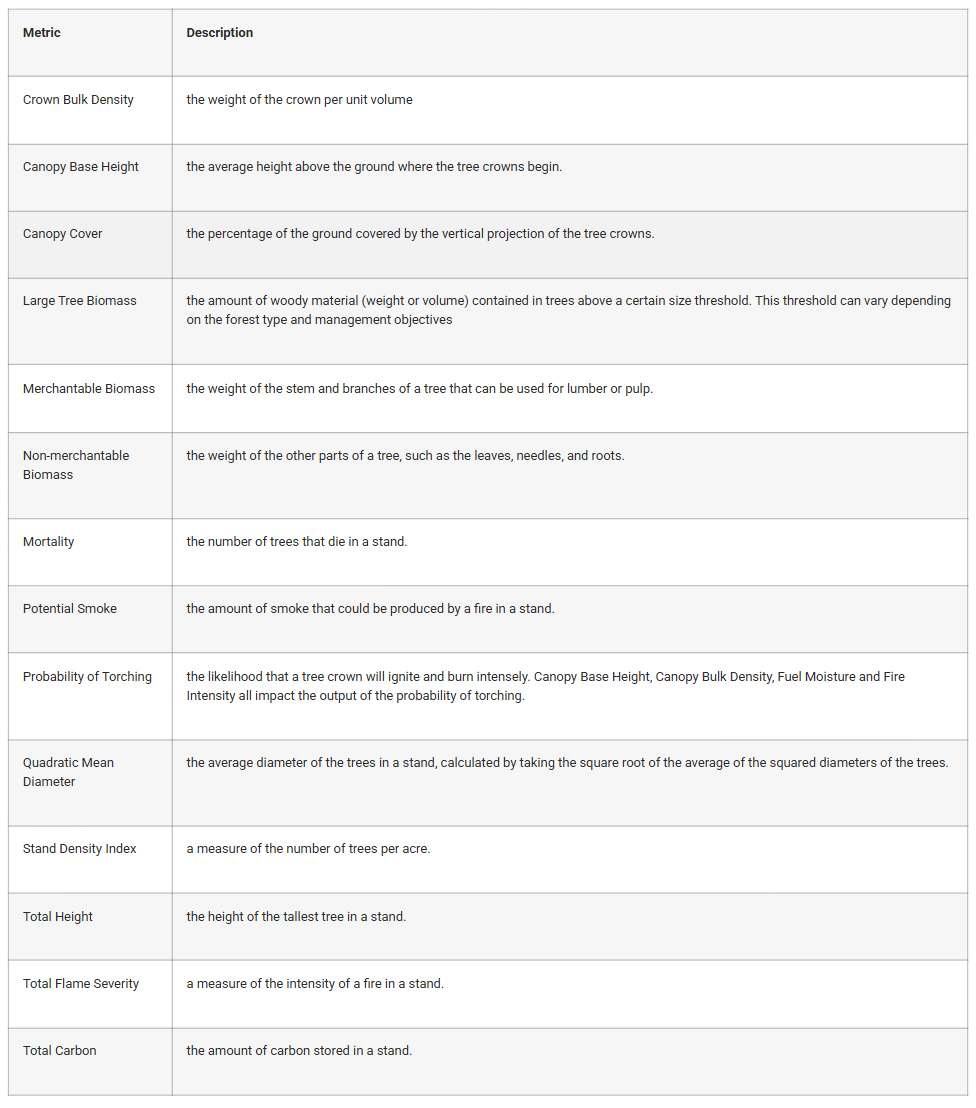
Forested Landscape:
Non-Forested Landscape:
For non-forested areas, the Treatment Effects tool provides outputs for Rate of Spread (ROS) and Flame Length, which differ from the metrics used for forested areas. These results are generated using the LANDFIRE Total Fuel Change Tool (LFTFCT) to assess fuel treatment impacts.
The LFTFCT applies disturbance codes to determine changes in the Fire Behavior Fuel Model 40 (FM40). The modified FM40 values are then used to classify and display the Flame Length and Rate of Spread adjective classes for non-forested stands. The outputs for non-forested areas are based on the standard fire behavior surface fuel models (Scott and Burgan 2005).
Additional information can be found on the Vegetation and Fuels Modeling Methodology page.
Note: Non-burnable fuel models will not display Flame Length or Rate of Spread outputs.-
Per RMRS GTR153, spread rates and flame lengths are referred to as being very low, low, moderate, high, very high, and extreme—assuming two-thirds cured herbaceous, dry dead fuels (moisture scenario D2L2), a midflame wind speed of 5 mi/h, and zero slope. See the following table: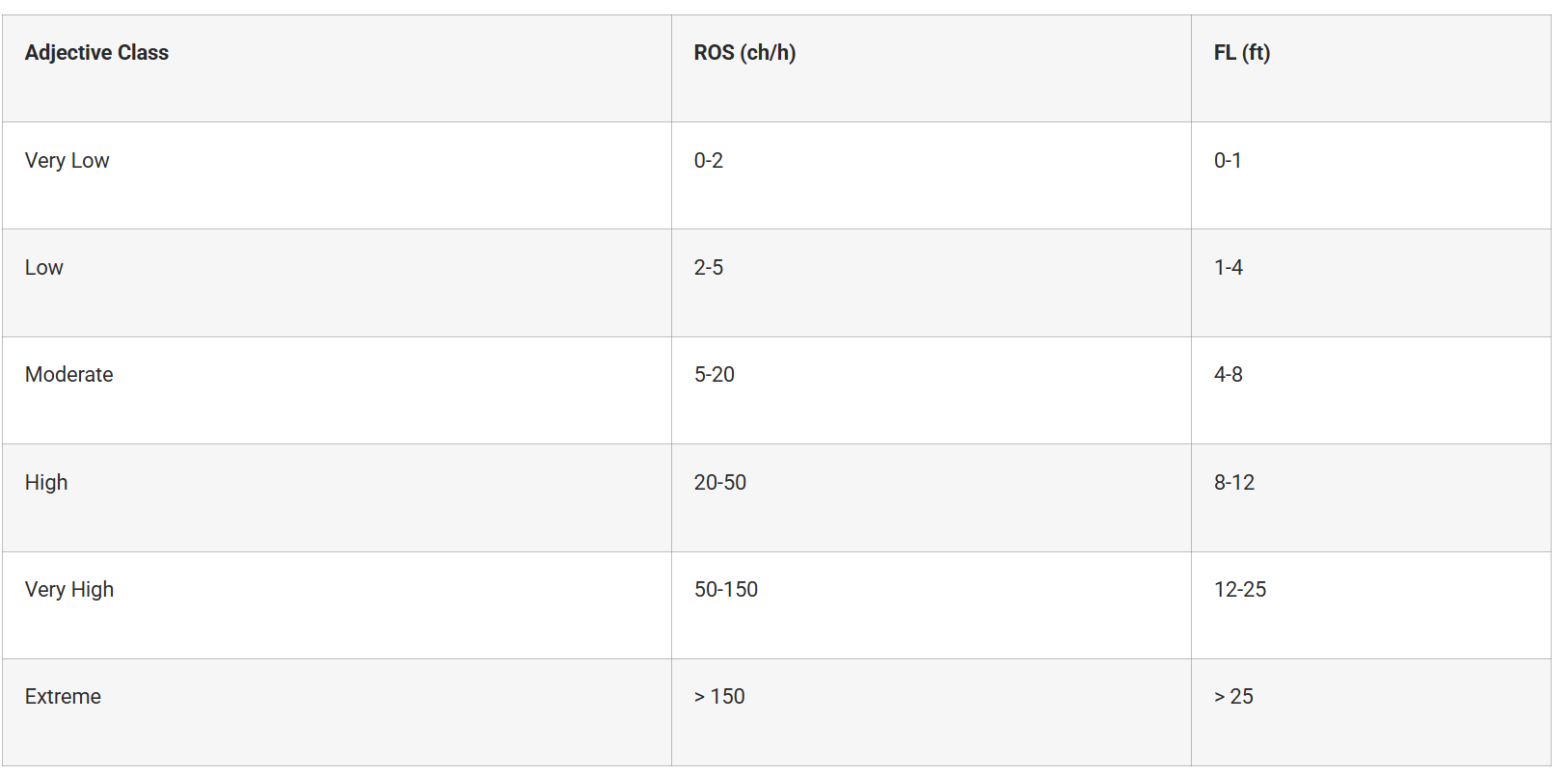
Was this article helpful?
That’s Great!
Thank you for your feedback
Sorry! We couldn't be helpful
Thank you for your feedback
Feedback sent
We appreciate your effort and will try to fix the article